











eCommerce Funnel Engineering
We’re Not Redesigning Pages. We’re Fixing the System That Turns Traffic Into Revenue.
Conversion lifts from 21.8% to 212%. One brand’s conversion rate went from 4.1% to 6.2% — effectively halving its cost to acquire a customer.
Traffic is expensive and getting more so. Funnel engineering is the work of making the traffic you already pay for convert better: PDP architecture, offer and bundling logic, checkout friction, landing page systems, and the post-purchase experience — designed as one system rather than optimized as separate pages.






Traffic is expensive, conversion is flat, and nobody trusts the data enough to know what to fix
That’s the position most brands are in when they call us, and it’s rarely because any single page is bad. It’s because the pages were built at different times by different people against different assumptions.
Where funnels leak
Pages optimized individually, in isolation
The real differentiator isn’t any one page; it’s the connective tissue between them. Fixing pages one at a time produces a series of local wins and a funnel that performs about the same.
Paid traffic landing on a generic experience
Landing pages are ads now. Brands running influencer partnerships routinely see a channel convert well and never adapt the landing experience to what they know about that audience.
Offer complexity mistaken for offer choice
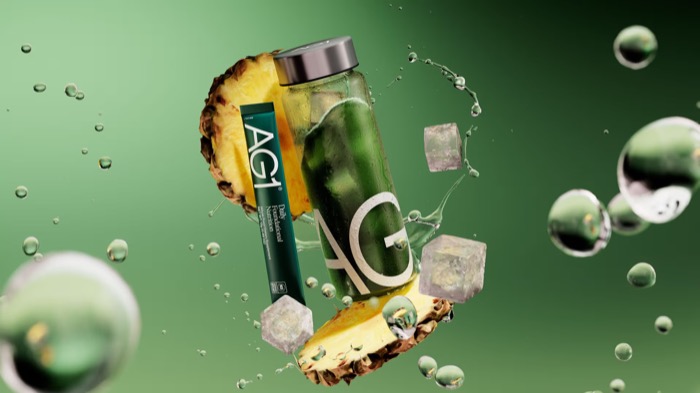
AG1’s offer experience was optimized on exactly this principle: simplify the choice, reinforce credibility, build emotional trust.
Checkout friction nobody has measured
Vuori’s checkout went from three pages to one, with address validation down to apartment identification. → Market Expansion · Omnichannel Commerce
A subscription business measured like a one-time-purchase business
Where revenue is recurring, the offer framing and first-delivery expectations set at checkout determine retention months later — but the funnel gets optimized against a conversion rate that can’t see any of it.
Data you can’t act on
Aventon’s engagement began with rebuilding GTM and GA tracking for decision-grade data because the optimization program couldn’t function without it.
Experience
18+
Years of Unlocking Growth
Scale
$3.14B+
in GMV Migrated to Shopify
Partnership
1 of 5
Founding NA Shopify Platinum Partners
Precision
94.7%
Implementation Predictability
Clients
8
Unicorns & Counting
Conversion rate lifts of 212% (Thesis), 57% (True Botanicals), and 21.8% (Aventon) — measured against pre-engagement baselines.
Five things we’ve concluded about buying systems
These come from running optimization programs across repeat-purchase brands for seventeen years.
For a subscription brand, the funnel and the retention journey are one system
The subscription journey starts at the first touch and runs through the offer, the checkout, the first delivery, the portal, and every reorder decision after that. An experiment that sets accurate expectations may convert slightly worse and retain dramatically better. → Subscription & Retention Experiences
Bigger swings beat more tests
The landscape changes fast, seasonality moves the numbers, and offer strategy shifts, which means small nimble programs frequently spend more running tests than the results are worth.
An optimization program can be ROI-negative, and you should check
If conversion goes from 3% to 3.03%, did that win justify the designer, the developer, the analyst, and the six weeks? Sometimes yes at scale. Often no.
Mobile is where the funnel is decided
BRUNT’s audience of trade workers shopped on mobile, where degraded performance had made the funnel leaky; targeting mobile first lifted mobile conversions 40.7% in under two quarters.
Validate before you build
On Mack Weldon, major features were validated through usability studies before development. When testing showed customers preferred bundling on the product page, we integrated it natively — that experience went on to generate over $2M.
The work
UX and data audit
Aventon’s covered speed, codebase, accessibility, scalability and stability, and architecture — plus the analytics work required to make the findings measurable.
PDP conversion architecture
Comparison modules, credibility reinforcement, and reviews integrated properly — Yotpo Reviews on Mack Weldon’s product pages lifted conversion 25%.
Offer, bundling and subscription framing
Bundle construction, prepay positioning, frequency defaults, cart upsells, and free-gift logic. → Subscription & Retention Experiences
The subscription journey end to end
The arc from first touch through offer, checkout, first delivery, portal, and reorder, designed as one system.
Discovery and quiz experiences
BPN’s quiz was rebuilt end to end; completion time fell 46%, completion rate rose 12%.
Checkout friction removal
Native Shopify checkout with Checkout Extensibility where custom logic is warranted.
Landing page systems and post-purchase
A landing page system your marketing team can operate, built for source-specific experiences.
What a funnel engagement commits to
| Commitment | Acceptance criterion |
|---|---|
| Gameplan | The first phase delivers a ranked attack plan with expected impact, not a findings document |
| Baseline | Measured before any change ships, with tracking verified as accurate first |
| Prioritization | Against business KPIs, not test volume — with the reasoning written down |
| Program economics | The cost of the program stated against its measured return |
| Retention impact | Modeled alongside conversion on every subscription-relevant change |
| Mobile first | Mobile treated as the primary funnel in every decision |
| Validation | Major features tested with real users before development |
| Marketing autonomy | An agreed list of what your team can ship without engineering |
If the program isn’t paying for itself, you’ll hear it from us first.
How funnel work runs
Audit and gameplan
Weeks 1–3
UX and data audit, analytics repair, journey and funnel diagnosis, baseline capture, opportunity sizing — a ranked attack plan, not a findings document.
System design
Weeks 2–6
The buying system designed end to end — PDP architecture, offer and subscription logic, checkout, landing page system, portal.
Build and validate
Weeks 5–12
Implementation, with usability validation before development on major features.
Compound
Ongoing
Continuous optimization against the baseline. Where that becomes a formal testing program, it’s CRO & Experimentation.
Timelines: Targeted funnel work runs 8 weeks end to end. A full buying-system redesign runs 12 to 16. Four Sigmatic’s partnership began as a 90-day trial that produced conversion and AOV gains inside the window, then ran six years.
Where funnel work starts
A full redesign
Gaia Herbs’ growth-centric redesign paired product discovery and education with a streamlined path to checkout, and DTC has grown 20%+ YoY since relaunch. → Composable Commerce
A targeted surface
PDP, cart, checkout, or quiz — one high-leverage surface rather than the whole site.
A conversion gap against the category
That was Aventon’s boardroom problem, and the answer was a rebuild rather than a tweak.
Post-replatform optimization
Thesis replatformed off fragile headless architecture and then reached a 212% conversion lift over four years.
An offer or subscription restructure
Where the funnel is fine and the offer is the constraint. → Subscription & Retention Experiences
Paid traffic that converts below expectation
Usually a landing experience problem rather than a media problem.
Anatta’s Agentic Operating System
Every funnel engagement runs on one system.
Senior strategists and designers paired with an agentic framework that absorbs the commodity execution — variant production, component builds, analytics instrumentation — so senior time goes to the system design and prioritization decisions that determine whether the program pays for itself.
See how we workFunnel work we’ve run
Thesis
Conversion from 2.2% to 3.72% in year one, and a 212% lift across four years
Explore the Thesis success storyTrue Botanicals
Conversion from 4.1% to 6.2% — effectively halving customer acquisition cost
Explore the True Botanicals success storyAventon
Conversion up 21.8% and revenue up 20% YoY after a ground-up rebuild
Explore the Aventon success storyBare Performance Nutrition
Conversion up 5.76%, checkout abandonment down 3.87%, and a quiz rebuilt to complete 46% faster
Explore the Bare Performance Nutrition success storyMack Weldon
Reviews on PDPs lifted conversion 25%; native bundling generated over $2M
Explore the Mack Weldon success storyDollar Shave Club
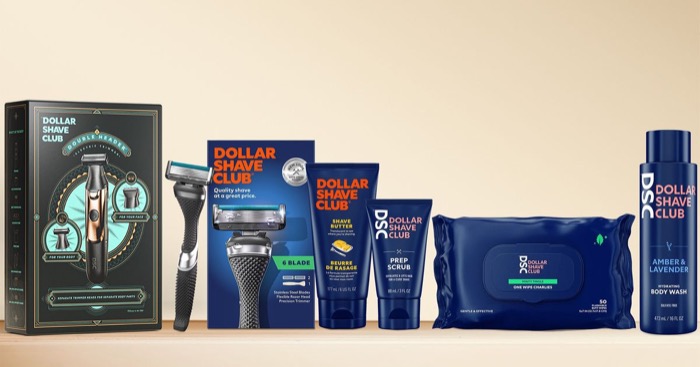
Bounce down 24%, new account registration up 90%, conversion up 11%
Explore the Dollar Shave Club success storyThird-party sources showed our conversion rate far below competitors — money was being left on the table and we were stuck, unable to fix it internally.
Adele NasrCMO, Aventon
This was a pivotal moment in our growth story.
Rebecca Boston SobelCMO, True Botanicals
How to find where your funnel leaks
Steps 1 and 2 will tell most brands to fix their measurement before optimizing anything, which is unglamorous and correct.
- Verify your tracking before you trust a number. If two tools disagree, resolve that first.
- Capture a real baseline. Conversion rate, revenue per visitor, AOV, and checkout abandonment, split by device.
- Split desktop and mobile completely. A blended number hides the problem.
- Find the biggest single drop. The step where the most people leave.
- Check what paid traffic lands on. A cheap fix with an outsized return.
- Count the decisions you ask a buyer to make. Then remove some.
- Price your optimization program against its return. If it’s negative, the answer is bigger bets rather than more tests.
- Ask what happens after purchase. Conversion that doesn’t retain is expensive.
The Funnel Diagnostic Framework
The worksheet version, with the baseline and program-economics models included. Name and email.
Frequently asked questions
Isn’t this just CRO or UX work?
CRO tweaks pages. Funnel engineering redesigns the buying system so gains compound instead of resetting. If you already have a working buying system and want to improve it incrementally, that’s CRO & Experimentation, and it’s the cheaper engagement.
How is this different from a redesign?
A redesign is one of the shapes funnel work takes, not a different service. If what you want is brand expression rather than conversion architecture, that’s Visual Design.
How long before we see results?
Targeted work on a single surface can show results in weeks. A full buying-system redesign takes a quarter or more and the compounding shows up over years.
What conversion lift should we expect?
We won’t quote you a number before auditing your funnel and verifying your tracking. For context: Aventon gained 21.8%, True Botanicals went from 4.1% to 6.2%, and Thesis reached 212% over four years.
Could an optimization program cost more than it returns?
Yes, and it’s worth checking. Our most impactful work has come from bigger bets prioritized against business KPIs rather than from test count.
We’re a subscription brand. Does funnel work apply differently to us?
Substantially. The funnel and the retention journey are one system: the offer framing and first-delivery expectation set at checkout determine whether someone is still a subscriber in month six. → Subscription & Retention Experiences
Do we need to fix our analytics first?
Usually, yes. If event tracking is incomplete or two tools disagree, every optimization decision after that is opinion with a number attached.
Send us your conversion rate and your traffic cost.