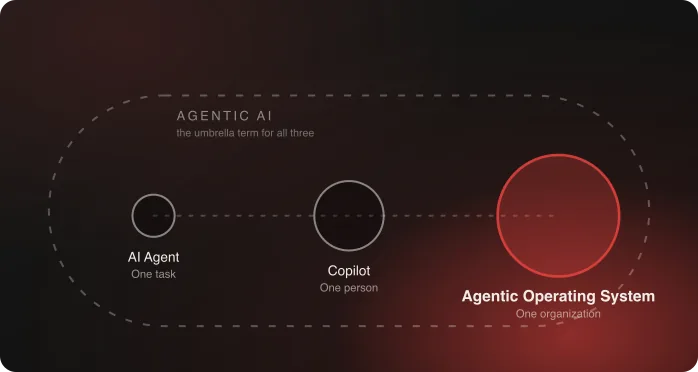













Agentic Operating System vs. Agentic Commerce
July 22, 2026
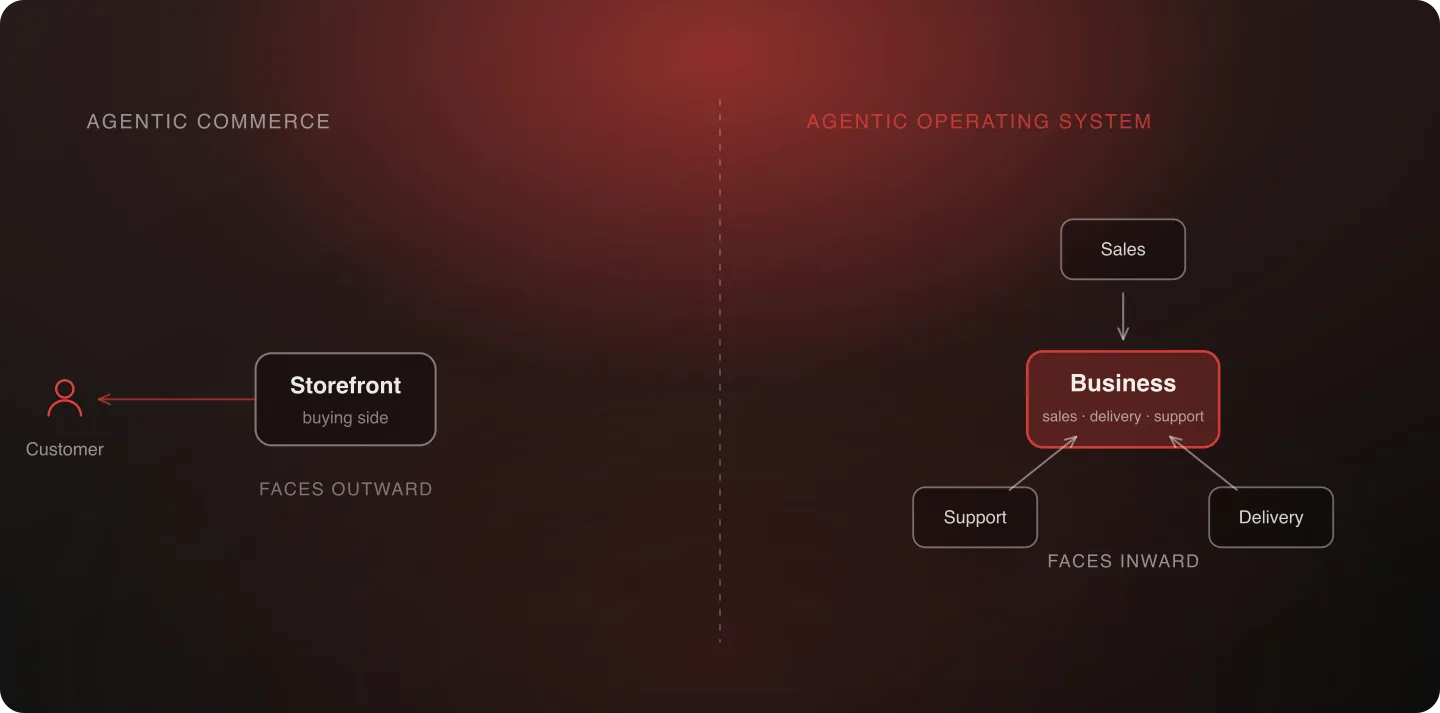
Agentic commerce is AI agents browsing, comparing, and buying on a customer’s behalf — action on the buying side of a storefront. An agentic operating system is software that orchestrates AI agents and human judgment to take delivery work from scope to shipped in weeks, not quarters. They share an adjective and nothing else. Anatta built the second one.
Two categories, one adjective
Agentic commerce describes AI shopping agents acting on a customer’s behalf — researching products, comparing options, and completing a purchase without the person doing the clicking themselves. It’s a change to the buying side of ecommerce: who (or what) is actually making the purchase decision and executing the checkout.
An agentic operating system is software that orchestrates AI agents and human judgment to take delivery work from scope to shipped in weeks, not quarters. Anatta built one — it runs the internal work of a business (sales, delivery, support), not a customer-facing shopping experience. Nothing about it involves a customer or a purchase.
Both terms emerged in the same period, both involve autonomous AI action, and both get called “agentic” — which is exactly why they collide in search and in conversation. They don’t share a category. They share a decade.
Side by side
| Agentic Commerce | Agentic Operating System | |
|---|---|---|
| Who acts | An AI agent, on a customer’s behalf | AI agents and humans, on a business’s own behalf |
| Faces | Outward — the storefront, the buyer | Inward — sales, delivery, support |
| What it does | Researches, compares, purchases | Scopes, builds, ships, governs |
| Where it lives | The shopping experience | The company’s operations |
| Anatta’s relationship to it | Prepares merchants’ storefronts and data to be legible to these agents (see below) | Built and runs one internally |
Does Anatta do agentic commerce?
Anatta builds storefronts that are not only capable, but clearly visible to shopping agents, to be more conducive to agentic commerce. This means making sure a merchant’s product data, catalog structure, and storefront are structured in a way that AI shopping agents can actually read and transact against correctly. That’s a data and architecture problem — squarely inside what an enterprise Shopify systems partner already does — not a claim that Anatta operates shopping agents itself.
Why this distinction matters more than it looks
If a brand asks “should we be worried about agentic commerce,” the honest answer depends entirely on which category they mean. Being unprepared for AI shopping agents (bad product data, checkout that assumes a human clicking through screens) is a real, current risk worth addressing. Confusing that with “we need an agentic operating system” — or the reverse — means solving the wrong problem. The two aren’t substitutes, and a vendor conflating them either doesn’t understand the distinction or is using the more-searched term to sell something else.
Frequently Asked Questions
What is agentic commerce?
Agentic commerce refers to AI agents that browse, compare, and complete purchases on a customer’s behalf — action on the buying side of ecommerce, rather than a person manually clicking through a storefront.
What is an agentic operating system?
Software that orchestrates AI agents and human judgment to take delivery work from scope to shipped in weeks, not quarters — used internally by a business to run its own sales, delivery, and support work. It has nothing to do with how customers shop.
Are agentic commerce and an agentic operating system the same thing?
No. They share the word “agentic” because both involve autonomous AI action, but agentic commerce is customer-facing (AI buying on someone’s behalf) and an agentic operating system is internal (how a business runs its own delivery work).
Does an agentic operating system help with agentic commerce?
Yes, indirectly but concretely. Anatta uses its own Agentic Operating System to build storefronts that are structured for AI shopping agents to read and transact against correctly — clean product data, a catalog structure, and storefront architecture agents can actually parse. That’s a data and architecture capability, not a claim that Anatta operates shopping agents itself.
Should my brand be preparing for agentic commerce?
If AI shopping agents are likely to research or transact against your catalog, product data structure and storefront accessibility matter now — this is a data and architecture question, not a hypothetical one.
Preparing your storefront for AI shopping agents is a data and architecture question. Talk to the team that treats it as one.