












Parallel Run vs. Big Bang: Choosing a Cutover Strategy
August 20, 2026
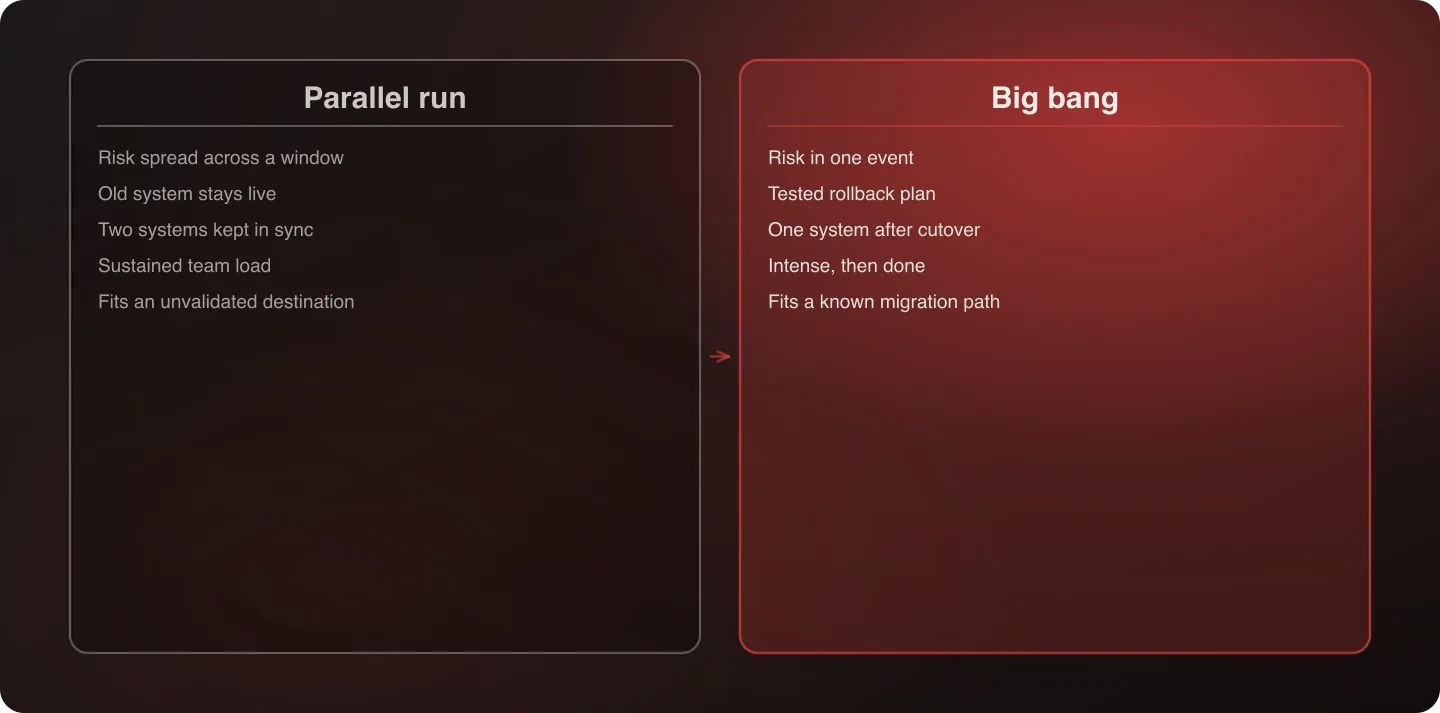
Parallel run keeps old and new systems running simultaneously during a transition window, spreading risk at the cost of coordination overhead. Big bang cuts over in one event, concentrating risk but reducing ongoing complexity. Most enterprise replatforms are better served by a carefully sequenced big bang with a tested rollback plan than by an extended parallel run.
Last verified: September 6, 2026.
The two strategies
Parallel run. Old and new systems run simultaneously, with traffic gradually shifted and both kept in sync. Lower risk of a hard failure, since the old system remains available as a fallback — but real ongoing coordination cost, because two systems have to stay synchronized for the whole duration.
Big bang. A single cutover moment; the old system is fully retired at once. Lower ongoing coordination overhead, but every risk is concentrated into one event rather than spread across a window.
| Parallel run | Big bang | |
|---|---|---|
| Risk shape | Spread across a window | Concentrated in one event |
| Fallback | Old system stays live | Rollback plan, tested in advance |
| Ongoing complexity | High — two systems kept in sync | Low — one system after cutover |
| Data integrity risk | Sync drift between systems | One-time migration correctness |
| Team load | Sustained, across weeks | Intense, across hours |
| Best fit | Destination still being validated at scale | Well-understood migration path |
Why big bang usually wins for enterprise replatforms, with the right safeguards
The coordination overhead of keeping two full systems in sync during a parallel run is itself a source of risk and cost, and it often exceeds the risk it's meant to mitigate. Every order placed during the window has to land in the right system and be reflected in the other; every inventory change has to propagate both ways; every customer record edited on one side has to reconcile with the other. That's not a background task, it's a second system of its own, built and operated for a few weeks and then thrown away.
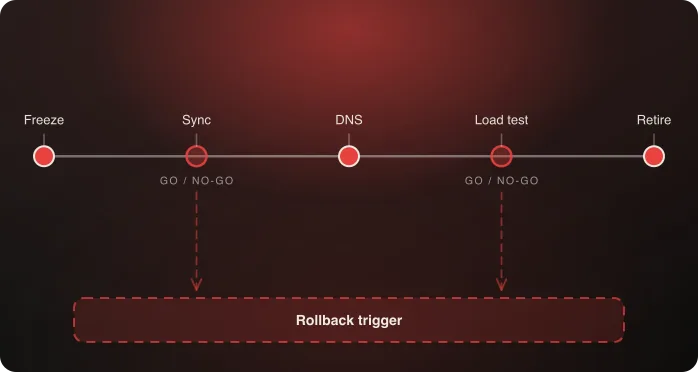
Provided the big bang cutover has a genuinely tested rollback plan and realistic load testing behind it, the concentrated risk is the more manageable of the two — because it's bounded in time and rehearsable. See the zero-downtime cutover runbook for what "genuinely tested" means in practice.
When parallel run is the right call
Parallel run makes more sense when the destination system is still being validated for correctness at scale, rather than when the migration path itself is well understood. If there's a real open question about whether the new platform handles your order volume, your pricing logic, or your fulfillment integrations correctly under production load, running both and comparing outputs answers that question in a way no staging environment can.
It also fits where a business genuinely cannot tolerate a bounded rollback window — a marketplace or B2B operation with contractual uptime obligations, for instance, where even a rehearsed rollback is an unacceptable outcome rather than a safety net.
The decision, stated honestly
The choice isn't really about risk tolerance in the abstract. It's about which risk you're better equipped to manage: the concentrated risk of one big event, or the ongoing risk of keeping two systems synchronized correctly for an extended window.
A useful test: ask who would operate the sync during a parallel run, and whether that person has the time and the tooling to reconcile a discrepancy the same day it appears. If the honest answer is that sync would be somebody's fifth priority, a parallel run is more dangerous than the big bang it was meant to de-risk.
Hybrids, and why they're harder than they look
Phased cutovers — one region, one brand, or one storefront at a time — sit between the two and inherit properties of both. They can be the right answer for a multi-storefront estate where the storefronts are genuinely independent. They're the wrong answer where the phases share a catalog, an inventory pool, or a customer base, because then you've built a parallel run and called it something else.
The question to ask of any proposed phasing is what data the phases share. Shared data means sync, and sync means the parallel-run cost profile whether or not anyone planned for it.
Two real reference points, at opposite ends of the timeline: buybuy BABY cut over in 31 days against a fixed external deadline, and Nuts.com moved a homegrown platform with live subscriptions over six months. Both were single cutovers, sequenced rather than staged.
What each strategy actually costs
The comparison is usually framed as risk against risk, which hides the part that decides most real projects: the two strategies consume very different amounts of people and time, in different shapes.
A parallel run's cost is sustained and often invisible in the plan. Somebody has to own synchronization for the length of the window. That means building or buying the sync mechanism, monitoring it daily, reconciling discrepancies as they appear, and deciding — repeatedly, under time pressure — which system is authoritative when the two disagree. None of that work appears on a Gantt chart as a task, which is exactly why it gets underestimated.
A big bang's cost is concentrated and visible. Rehearsals, load testing, the runbook itself, and an intense window with more people awake than usual. It's easier to plan for because it's easier to see, and it ends.
There's also an asymmetry in what each demands of the team. Parallel run needs sustained operational discipline over weeks; big bang needs preparation and a few hours of coordinated execution. Teams are usually better at one than the other, and choosing against your own team's strength is a bad trade regardless of the theoretical risk profile.
Four questions that settle the decision
- Is there a real open question about the new platform's correctness at production scale? If yes, parallel run answers it in a way staging cannot. If no, it's paying a sustained cost to answer a question you don't have.
- Who owns synchronization, by name, and what else is on their plate? If sync would be somebody's fifth priority, a parallel run is more dangerous than the big bang it was meant to de-risk.
- Has the rollback actually been rehearsed? A big bang's safety depends entirely on this. An untested rollback plan is a paragraph, not a contingency.
- Can the business tolerate a bounded rollback window at all? Where contractual uptime obligations make even a rehearsed rollback unacceptable, that settles it in favor of a parallel run regardless of everything above.
Answer those four honestly and the decision usually makes itself. What produces bad outcomes is choosing a parallel run for the feeling of safety without staffing it, which delivers the cost of one strategy and the risk of the other.
Where this fits
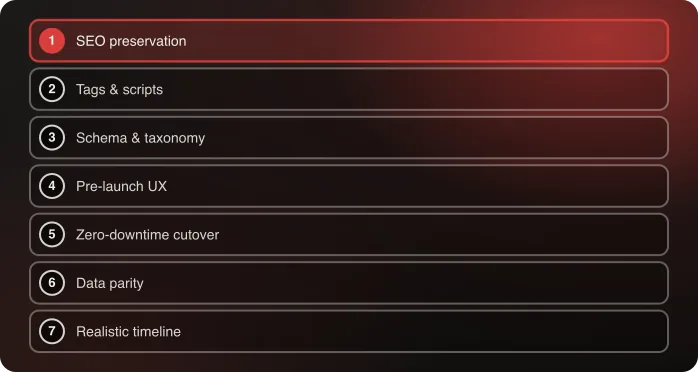
Cutover strategy is one decision inside the broader zero-downtime discipline, which is in turn the fifth of the seven disciplines in Anatta's replatforming method.
Frequently Asked Questions
Which cutover strategy is safer?
Neither is universally safer. It depends on whether you're better equipped to manage concentrated risk with a big bang, or ongoing synchronization risk across a longer window with a parallel run.
Why do most enterprise replatforms choose big bang?
Because the coordination cost of keeping two systems synchronized during a parallel run often exceeds the risk it's meant to reduce — provided the big bang cutover has real rollback planning and load testing behind it.
When is a parallel run clearly the better choice?
When the destination system is still being validated for correctness at scale, or where the business genuinely cannot tolerate even a rehearsed rollback window. Running both and comparing outputs answers a correctness question that staging can't.
Is a phased cutover a good middle ground?
Only when the phases are genuinely independent — separate storefronts, regions, or brands with no shared data. If the phases share a catalog, inventory pool, or customer base, a phased cutover is a parallel run with a different name and the same sync cost.
What's the hidden cost of a parallel run?
Sustained synchronization work that rarely appears as a task in the plan: building or buying the sync mechanism, monitoring it daily, reconciling discrepancies, and repeatedly deciding which system is authoritative when they disagree.
What single question most often settles the choice?
Who owns synchronization, by name, and what else is on their plate. If sync would be that person's fifth priority, a parallel run carries more risk than the big bang it was meant to reduce.
Talk to an architect about which cutover strategy fits your migration.

Related