






Enterprise Retail's Hardest Requirements, Proven on Shopify

Screens from the Follett Higher Education storefront

Impact

Kickoff to Live POC in Under 3 Sprints
Follett's first store launched on Shopify roughly 60 days after kickoff, a working proof of concept for one of enterprise retail's most complex migrations.
Financial Aid, Rentals and Course Materials on Native Primitives
The MVP proved Follett's hardest requirements could run on Shopify's core capabilities: financial aid as payment tender, textbook rentals, and course materials across online and in-store channels.
Architected for 1,200+ Stores
Every solution was designed for portfolio scale from day one: unified commerce with local controls, built for the full footprint of Follett's campus stores.

The Challenge

The Migration Everyone Assumed Was Impossible

Follett Higher Education operates over 1,200 campus stores across American colleges and universities. And campus retail is unlike any other commerce vertical:

  • Financial aid is a payment method. Students pay with aid balances governed by per-institution eligibility rules. The funds are usable for textbooks and course materials at one school, but restricted differently at another, because student logins and IDs are associated with their school-specific financial aid.
  • Textbooks are rented, not just sold. Rentals carry agreements, collateral, due dates, financial obligations, and check-ins across both online and in-store channels.
  • The catalog is tied to the classroom. Course materials change by institution, term, and enrollment, creating a data problem layered on a commerce problem.
  • Follett’s infrastructure was fragmented. A legacy stack with data silos across 1,200+ locations created critical risk during the semester rush, when a bookstore earns its year.

Conventional wisdom held that Follett’s business model required heavyweight custom enterprise software. But Follett needed that assumption tested before committing to transformation — a partner who could prove the path, de-risk the decision, and architect for the whole portfolio from the first sprint. Anatta took on the challenge.

The Solution

Prove The Concept, Then Architect for 1,200 Stores

A Phased Model Built to De-Risk the Decision

Anatta structured the engagement to earn conviction in stages: a focused proof of concept first, then an MVP expanding to the business's hardest capabilities. Each phase was designed to answer the biggest open question before larger commitments. An agile working rhythm was stood up across three organizations, connecting Anatta, Follett, and Shopify leadership around a single cadence.

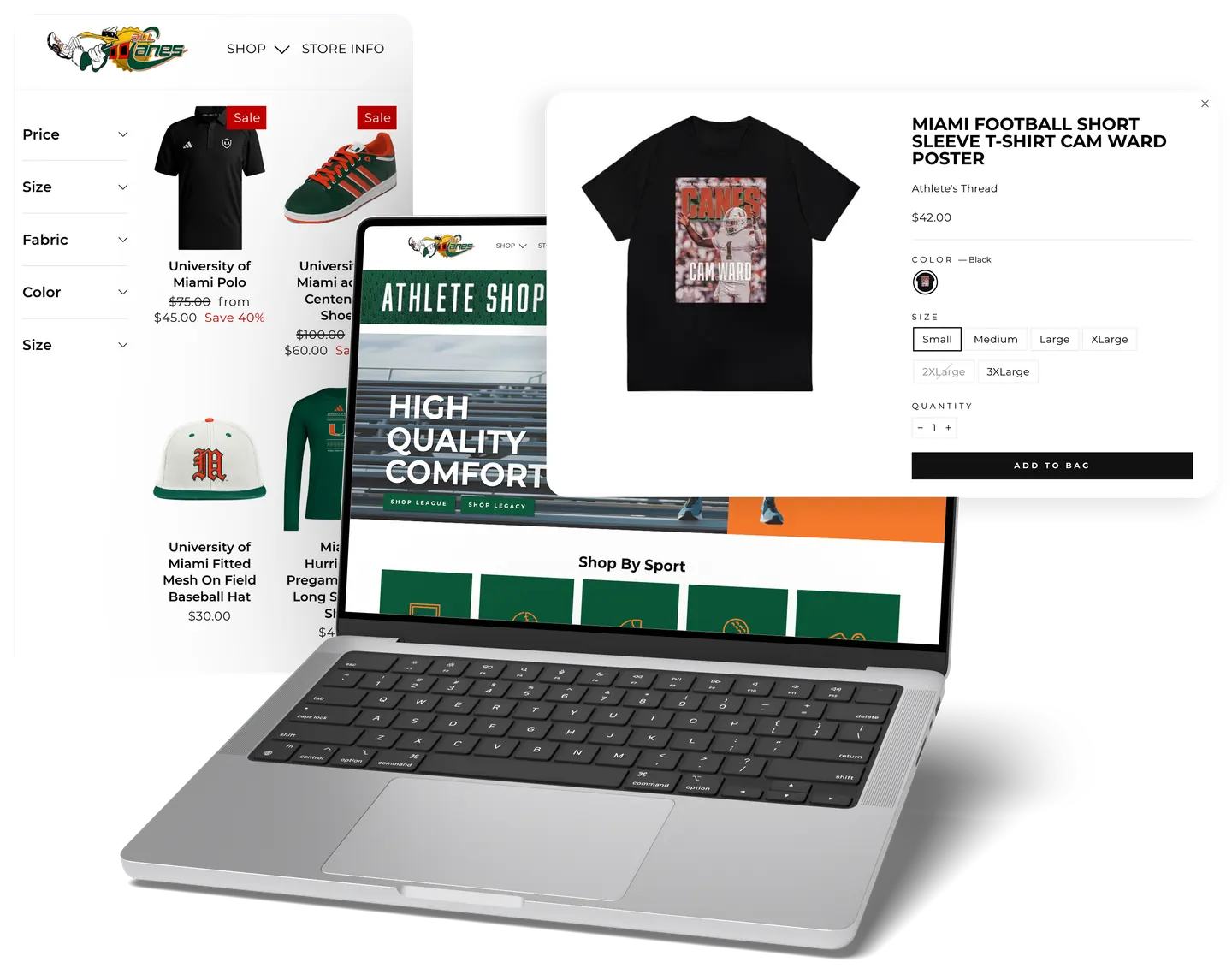
The POC moved from kickoff to a live store in under three sprints. The launch brought Follett's allCanes store onto Shopify with eCommerce and POS for general merchandise, full product and inventory data, and discount and coupon logic. Within sixty days, Follett's POC was online and ready for real transactions.

The allCanes storefront collection page and a product modal shown on a laptop
The allCanes proof of concept: eCommerce and POS on Shopify, live inside three sprints.

Anatta’s “Default to Default” Framework Faces Its Biggest Test Yet

The MVP took on the requirements that made Follett’s migration challenging, and solved them leading with Shopify-native first. Custom infrastructure was scoped only for where the business genuinely demanded it.

  • Financial aid became a native payment flow. Checkout extensions surface a “Use Financial Aid” option that validates cart eligibility in real time against Follett’s payment services. Shopify’s gift card primitive then carries the tender on the order, and POS UI extensions give store associates student lookup and balance workflows using the same APIs. One integration now serves both channels.
  • Rentals run on the Subscriptions primitive. Shopify Subscriptions captures and charges post-rental collection fees where needed, integrated through purpose-built middleware with Follett’s rental system as the source of truth. Eligibility, agreements, due dates, collateral, and multi-channel check-in remained intact.
  • Course materials shipped across online and POS. The revenue core of the business now lived on the new Shopify foundation.
  • Middleware stayed on a short leash. Orchestration was built only for routing orders, enriching financial aid data, and syncing inventory. Everything else rode Shopify’s core capabilities.

The Results

What the Engagement Proved

  • The “Unmigratable” Business Ran: Financial aid tender, textbook rentals, and course materials — the three requirements assumed to demand custom enterprise software — operated on Shopify’s native primitives, across both eCommerce and POS.
  • Sixty Days to Launch: The first store went from kickoff to live in under three sprints, clear evidence that even the most complex enterprise migrations can produce working proof before demanding institutional commitment.
  • A Portfolio-Scale Architecture: Every solution was engineered for 1,200+ stores from the first design decision, meaning unified commerce with local controls, ready for phased expansion across the footprint.
  • A New Ceiling for the Platform: The engagement stands among the most complex Shopify implementations ever undertaken, and is proof for every enterprise retailer watching that the platform’s ceiling is far higher than assumed.

Looking Forward

For enterprise leaders weighing their own “impossible” migration, Follett’s engagement reframes the question. The right test of whether a standard platform can carry your complexity is whether a partner can prove it in production, and prove it quickly.

Facing a similar challenge?
Get in touch with us—we can help.
Anatta Team Member image
Chat with Our Talented Team

More Anatta Success Stories

Four Sigmatic imagery
Food & Beverage

Bounce rate down 90% on a sub-second storefront

Read now
Gaia Herbs imagery
Health & Beauty

DTC up more than 20% YoY on one consolidated platform

Read now
Good Ranchers imagery
Food & Beverage

Out of headless in eight weeks, with churn down 32%

Read now