












Replatforming During Peak Season: What to Know Before You Commit to a Date
August 23, 2026
Replatforming during a peak season multiplies the cost of any mistake. Traffic volume amplifies the impact of a cutover issue, and support and engineering resources are stretched thinnest exactly when problems are most expensive. If the timeline allows, sequencing outside peak season is worth the schedule tradeoff.
Last verified: September 6, 2026.
Why peak season changes the risk calculus
Every risk covered elsewhere in this series — a redirect gap, a data migration issue, a checkout bug — costs more during peak season simply because more traffic and revenue are flowing through the affected surfaces at the exact moment a problem would occur. The same bug is a minor issue in a slow month and a serious incident during Black Friday week.
Two second-order effects compound it. Engineering and support capacity is already committed during peak, so the people who would diagnose and fix an issue are the same people running the season. And the window for a considered response shrinks: a problem you'd normally take two days to fix properly gets a same-hour workaround instead, which becomes its own technical debt.
What counts as peak is category-specific
Q4 is peak for most retail, but it isn't universal. Fitness and nutrition brands peak in January; garden and outdoor in spring; back-to-school in late summer; gifting categories may have two peaks rather than one. Baby and registry businesses run on a different rhythm again.
Establish your own peak from your own data — the highest-revenue and highest-traffic weeks over the last two years — rather than assuming the retail calendar applies. That number is also what the cutover load test should be sized against, per the zero-downtime runbook.
When peak-season replatforming is unavoidable
Sometimes it genuinely is: a lease expiration, an acquisition integration deadline, or a platform sunset date that doesn't align conveniently with a slow season. buybuy BABY's 2023 timeline is a real example — the business needed to be trading before the season, not after it, and that constraint wasn't negotiable.
When that's the reality, the mitigation isn't avoiding the timing. It's over-investing in the disciplines that matter most under peak load:
- Spike-tested cutover plans sized against your actual peak hour, not your daily average
- Additional monitoring staffing through the launch window and the days after, with a named on-call rotation rather than an assumption someone will be watching
- A faster-triggered rollback threshold than you'd use in a quieter month — the cost of rolling back is roughly constant, while the cost of pressing on with a problem scales with traffic
- A code freeze after cutover for the duration of the peak, so the only changes going out are fixes
Code freeze best practices covers that last point in more detail, including how to run one without blocking genuine emergencies.
buybuy BABY's migration is the worked example: four retail stores reopened with Shopify POS before BFCM 2023, on a deadline set by the season rather than by the project.
When it's avoidable and being rushed anyway
If there's genuine flexibility in the timeline and a peak-season launch is being driven by internal momentum rather than a real external constraint, it's worth explicitly surfacing the tradeoff to decision-makers before committing to a date. The cost of a few weeks' delay is almost always smaller than the cost of a peak-season incident.
The most useful way to frame that conversation is in terms of the rollback decision. Ask what the team would do if a serious problem surfaced two days after cutover, during peak. If the honest answer is "we'd have to live with it," the launch is being scheduled at the point where the safety net doesn't work.
A peak-season launch plan, if you have to
When the date is fixed by something outside the project, the plan changes shape rather than the date. Four things to add:
A code freeze that starts earlier and holds longer. Freeze before the traffic ramp begins, not when it peaks, and hold it through the season with a documented exception process for genuine emergencies. Code freeze best practices covers how to run one without blocking real fixes.
A named on-call rotation, staffed in advance. Not "the team will be watching" — an actual rota with names, hours, and an escalation path that reaches someone with authority to trigger a rollback. Peak weeks include holidays, and an unstaffed assumption fails on exactly the day it matters.
Load testing against your own peak hour. Not your average day, and not a generic multiple of it — the highest hour you actually recorded in the last two years, plus headroom for growth.
A lower rollback threshold, agreed in writing. The cost of rolling back is roughly constant; the cost of pressing on with a problem scales with traffic. That means the threshold that's correct in March is too high in November, and the number should be set before anyone is tired.
The conversation to have before the date is fixed
Whether the timing is genuinely forced usually becomes clear from one question: what happens if this launches eight weeks later than planned? If the answer names a specific consequence — a contract ends, a system is switched off, a season is missed entirely — the constraint is real and the plan above applies.
If the answer is that people would be disappointed or that momentum would be lost, the constraint is internal, and it's worth putting the tradeoff in front of whoever owns the date. The cost of a delay is known and bounded. The cost of a peak-season incident is neither.
The best window, if you get to choose
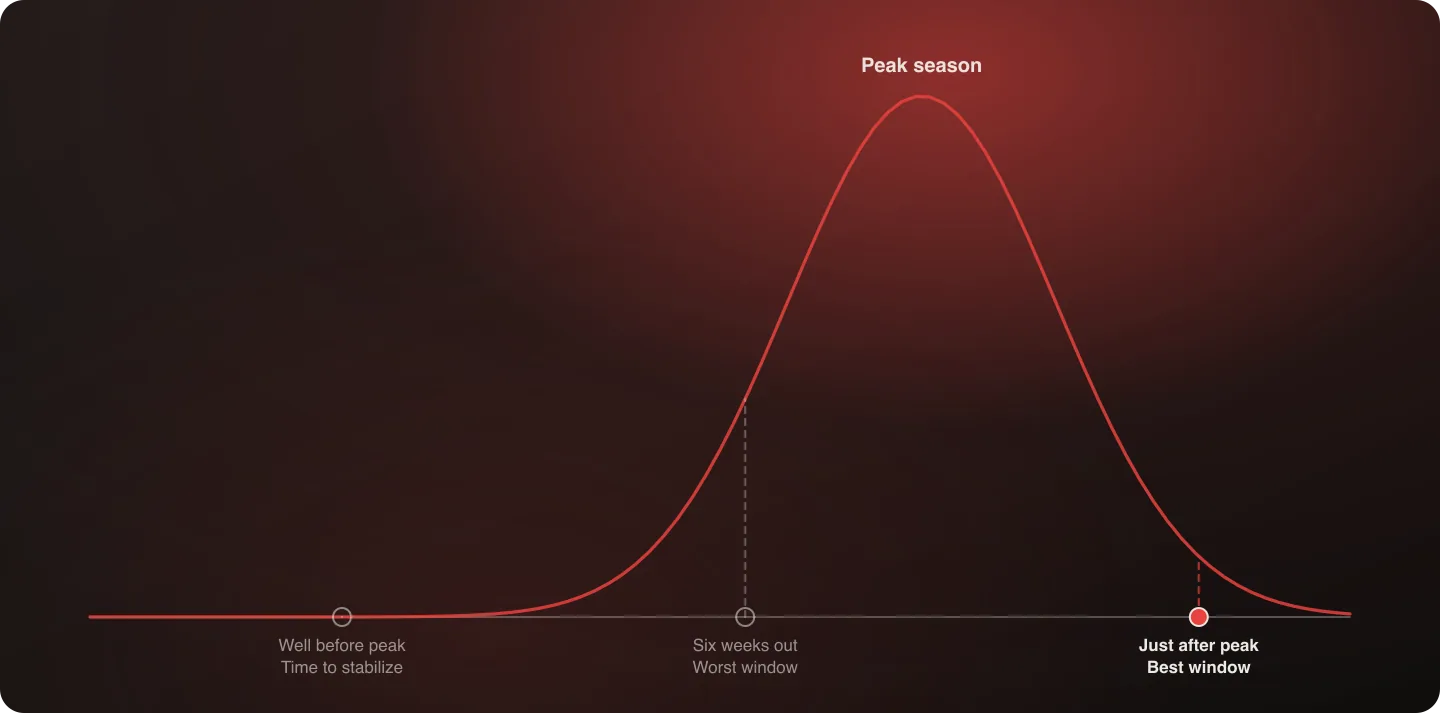
Immediately after a peak, rather than immediately before. Traffic is falling rather than rising, the team has capacity again, and there's a full cycle of runway before the next peak to find and fix the issues that only real traffic surfaces. Launching six weeks before a peak is the worst of both — insufficient time to stabilize, and rising traffic against an unproven system.
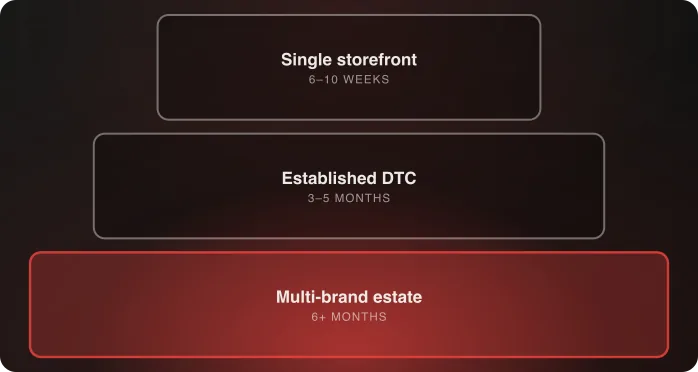
Timing sits alongside duration in replatforming timelines by complexity, and inside the broader replatforming method.
Frequently Asked Questions
Is it ever necessary to replatform during peak season?
Sometimes. An acquisition deadline, lease expiration, or platform sunset can force the timing. When unavoidable, over-invest in cutover testing, monitoring staffing, and a faster rollback threshold than you'd use otherwise.
How much more risk does peak-season replatforming actually carry?
The same technical risks as any migration, but every one costs more because more traffic and revenue flow through the affected surfaces at the exact moment an issue would occur — and the people who would fix it are already committed to running the season.
When is the best time to replatform?
Immediately after a peak rather than before it. Traffic is falling, the team has capacity, and there's a full cycle of runway to find and fix what only real traffic surfaces. Launching six weeks before a peak is the worst available window.
Is Q4 peak season for every business?
No. Fitness and nutrition peak in January, garden and outdoor in spring, back-to-school in late summer. Establish your own peak from your own highest-revenue weeks over the last two years, and size the cutover load test against that number.
How do you know whether a peak-season date is genuinely forced?
Ask what specifically happens if the launch slips eight weeks. If the answer names a contract ending, a system being switched off, or a season missed entirely, the constraint is real. If the answer is disappointment or lost momentum, it's internal and the tradeoff belongs in front of whoever owns the date.
What changes in the plan for a peak-season launch?
An earlier and longer code freeze, a named on-call rotation staffed through the holidays with a real escalation path, load testing against your own recorded peak hour rather than an average, and a lower rollback threshold agreed in writing before anyone is tired.
Talk to an architect about timing your replatform.

Related