












Shopify Plus Checkout Customization in 2026: What's Possible, What Isn't, Plus vs Advanced
August 5, 2026
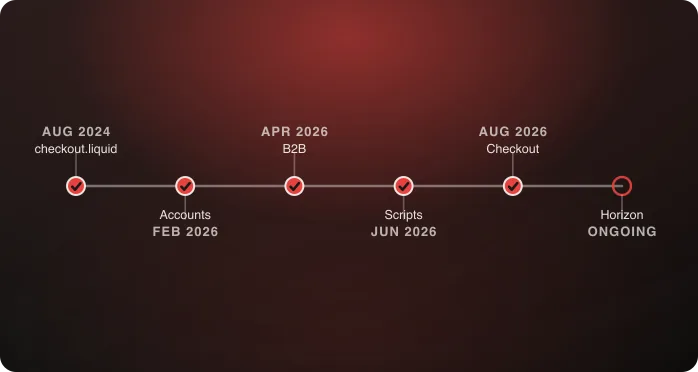
Since Checkout Extensibility replaced checkout.liquid, most checkout customization capability is now available on every plan — custom fields, upsells, branding, tracking. Plus's specific edge is deeper checkout UI extension points and higher customization ceilings for complex logic. Here's exactly where the line sits in 2026.
Last verified: September 6, 2026.
What Every Plan Can Now Do
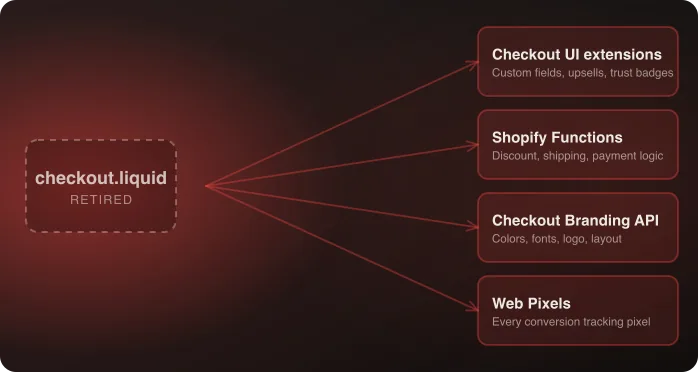
Checkout Extensibility isn't Plus-exclusive. Every plan gets:
- Checkout UI extensions at standard render locations
- Shopify Functions for discount, shipping, and payment logic
- The Checkout Branding API for visual customization
- Web Pixels for tracking
This is a meaningful change from the checkout.liquid era, when deep checkout customization was Plus-only, and it's a change most existing comparison content hasn't caught up to. → For the broader “do I need Plus” question, see Shopify Plus vs Advanced in 2026.
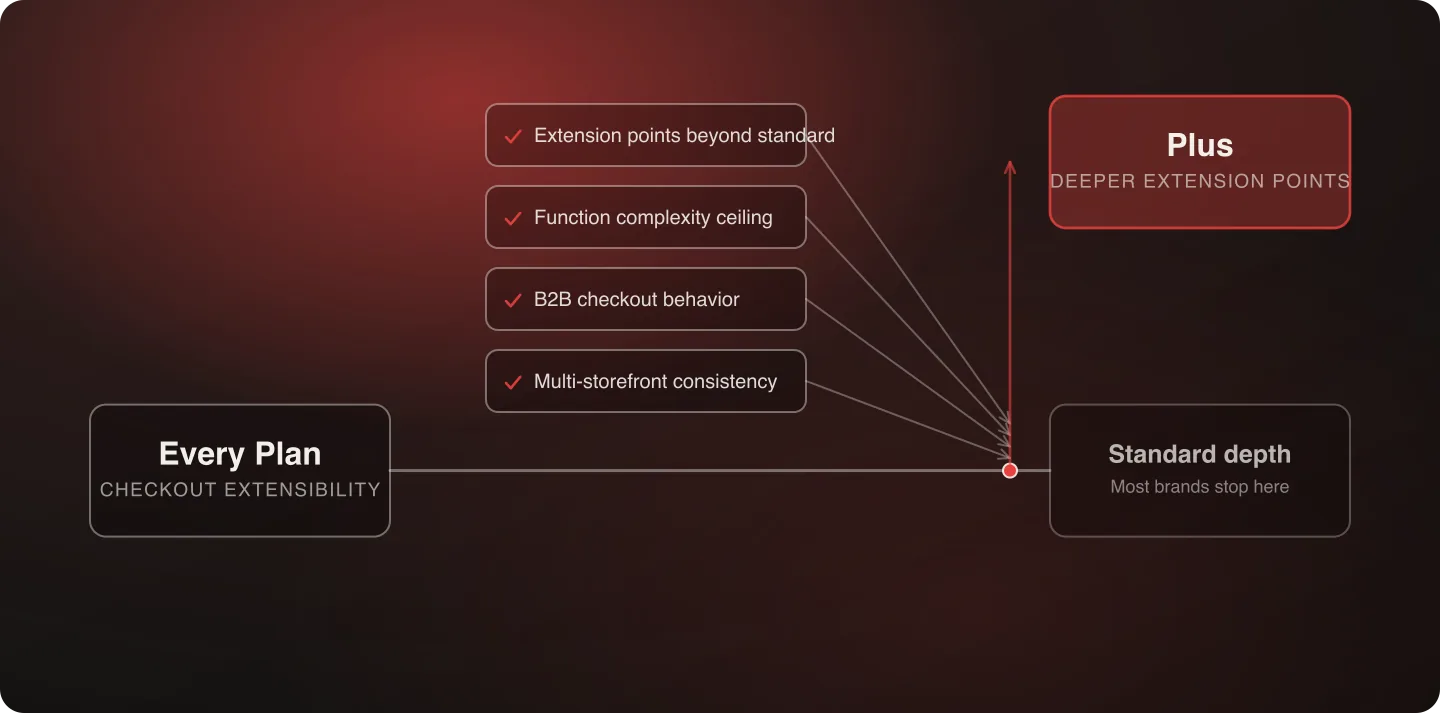
Where Plus Still Pulls Ahead
- Additional checkout UI extension points not available on other plans — more render locations means finer control over where custom content appears, which matters most for merchants running several distinct customizations that would otherwise compete for the same limited set of standard locations
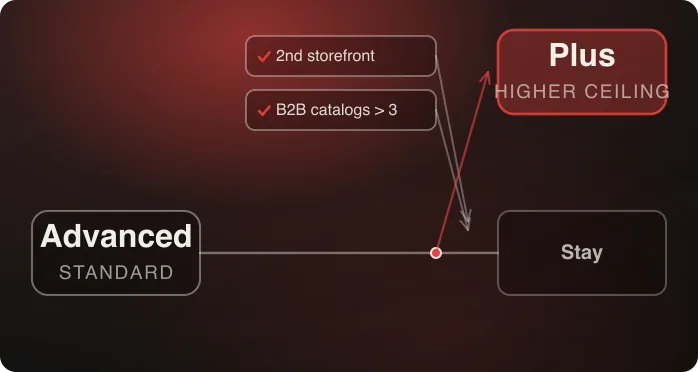
- Higher complexity ceiling for Functions — Plus stores typically support more sophisticated discount/shipping logic combinations without hitting plan-level constraints, which becomes relevant once a merchant has several interacting rules rather than one or two simple ones
- B2B-specific checkout customization tied to Plus's deeper B2B catalog and pricing capabilities — company-specific pricing or terms displayed at checkout is a Plus-tier capability tied to the broader B2B feature set
- Multi-storefront checkout consistency — maintaining custom checkout logic across multiple expansion stores is a Plus-specific scenario, since expansion stores themselves are a Plus feature
Real Use Cases Where This Distinction Matters
A single-storefront DTC brand wanting a gift-message field and a post-purchase upsell. This is squarely within what Advanced now supports — no Plus-specific capability is required here.
A brand running five interacting discount rules with complex eligibility logic. This is where the Function complexity ceiling starts to matter — Advanced can hit constraints that Plus doesn't, once logic gets genuinely complex rather than a single conditional rule.
A B2B brand needing to show company-specific negotiated pricing at checkout. This ties directly to Plus's B2B catalog depth — the checkout customization itself depends on data structures (unlimited catalogs, direct company assignment) that are Plus-exclusive regardless of checkout capability.
A multi-region brand running three expansion stores wanting consistent custom checkout branding across all three. Expansion stores are Plus-only, so this scenario is Plus-dependent from the storefront architecture up, not just at the checkout layer.
What This Means Practically
If your checkout customization needs are standard — custom fields, upsells, branding, tracking, straightforward discount logic — Advanced now covers this, which wasn't true before Checkout Extensibility existed. The decision to upgrade for checkout customization specifically should now be based on whether you need the extension points and complexity ceiling that are genuinely Plus-only, not on customization in general.
A Practical Checklist
Before assuming you need Plus for checkout customization, confirm, one at a time, with a specific answer rather than a general impression:
- Does your customization need a render location only available on Plus? Check the specific extension point against current plan documentation rather than assuming based on what checkout.liquid used to require.
- Does your discount/shipping logic complexity exceed what Advanced's Function limits support? This is usually only a real constraint once you have several interacting rules, not one or two simple ones — count your actual active rules rather than estimating.
- Do you need B2B-specific checkout behavior tied to Plus's catalog features? If yes, this is really a B2B catalog decision wearing a checkout-customization framing — the catalog requirement is the actual driver.
- Are you running multiple storefronts needing consistent custom checkout logic? If you're not yet running expansion stores, this question is moot regardless of checkout needs — the Plus requirement here comes from the storefront architecture, not checkout specifically.
If none of these apply, checkout customization alone likely doesn't justify a Plus upgrade — the broader plan comparison in the linked Plus vs Advanced piece covers the rest of that decision, including the parts unrelated to checkout specifically.
How to Verify Current Limits Rather Than Relying on This Page Alone
Plan-level Function complexity limits and extension point availability are the kind of detail Shopify updates periodically, sometimes without much fanfare. Before making a final decision based on any specific limit cited here or elsewhere, confirm current numbers directly against Shopify's own plan documentation or with your Shopify rep — treat published comparisons (including this one) as directionally accurate and verify anything the decision genuinely hinges on.
How This Fits with the Broader Plus vs. Advanced Decision
Checkout customization is one input into the larger Plus vs. Advanced decision, not the whole decision. It's common for a merchant to fixate on one specific checkout customization need as the deciding factor, when in practice that single need turns out to be achievable on Advanced, while the actual reasons to consider Plus (multi-storefront needs, deeper B2B catalog requirements, higher transaction volume) sit elsewhere entirely. Treat this page as answering one narrow question well, and consult the broader comparison for the decision as a whole — a checkout customization question in isolation is rarely sufficient grounds for a plan decision by itself.
A Note on Evaluating Vendor Claims
If an agency or app vendor tells you a specific checkout customization “requires Plus,” ask them to name the specific extension point or Function limit involved, rather than accepting the claim generally. Since Checkout Extensibility opened most customization to every plan, a vague “you'll need Plus for that” claim is exactly the kind of outdated assumption this page exists to correct — a specific, verifiable answer is a reasonable thing to expect from anyone making that recommendation.
Frequently Asked Questions
Do I need Shopify Plus to customize checkout in 2026?
Not for standard customization — custom fields, upsells, branding, and tracking are available on every plan via Checkout Extensibility. Plus's edge is additional extension points and a higher complexity ceiling for custom logic.
What checkout customizations are still Plus-exclusive?
Certain additional checkout UI extension points, higher Function complexity ceilings, B2B-specific checkout behavior tied to Plus's catalog features, and consistent custom logic across multiple expansion stores.
Has checkout customization changed since checkout.liquid was retired?
Yes significantly — Checkout Extensibility opened meaningful customization to every plan, not just Plus, which was the checkout.liquid-era norm. Most existing comparison content online hasn't been updated to reflect this.
How many interacting discount rules can Advanced actually support before hitting a limit?
This varies and is worth confirming directly against current plan documentation rather than assuming a fixed number — the practical signal is whether you're running one or two simple rules (fine on Advanced) versus several interacting rules with complex eligibility logic (where Plus's higher ceiling starts to matter).
An agency told us we need Plus for a specific checkout customization — how do we verify that?
Ask them to name the specific extension point or Function limit that requires it. Since most checkout customization opened to every plan with Checkout Extensibility, a general “you'll need Plus” claim without a specific technical reason is worth double-checking against current plan documentation directly.
Do Plus-specific checkout limits change over time?
Yes — treat any specific number (extension points, Function complexity ceilings) as something to verify against current Shopify documentation before a final decision, since plan-level details are updated periodically.
Not sure if your checkout needs are Plus-specific? Talk to an architect.

Related